Amsterdam
Peter Hedley’s home away from home.
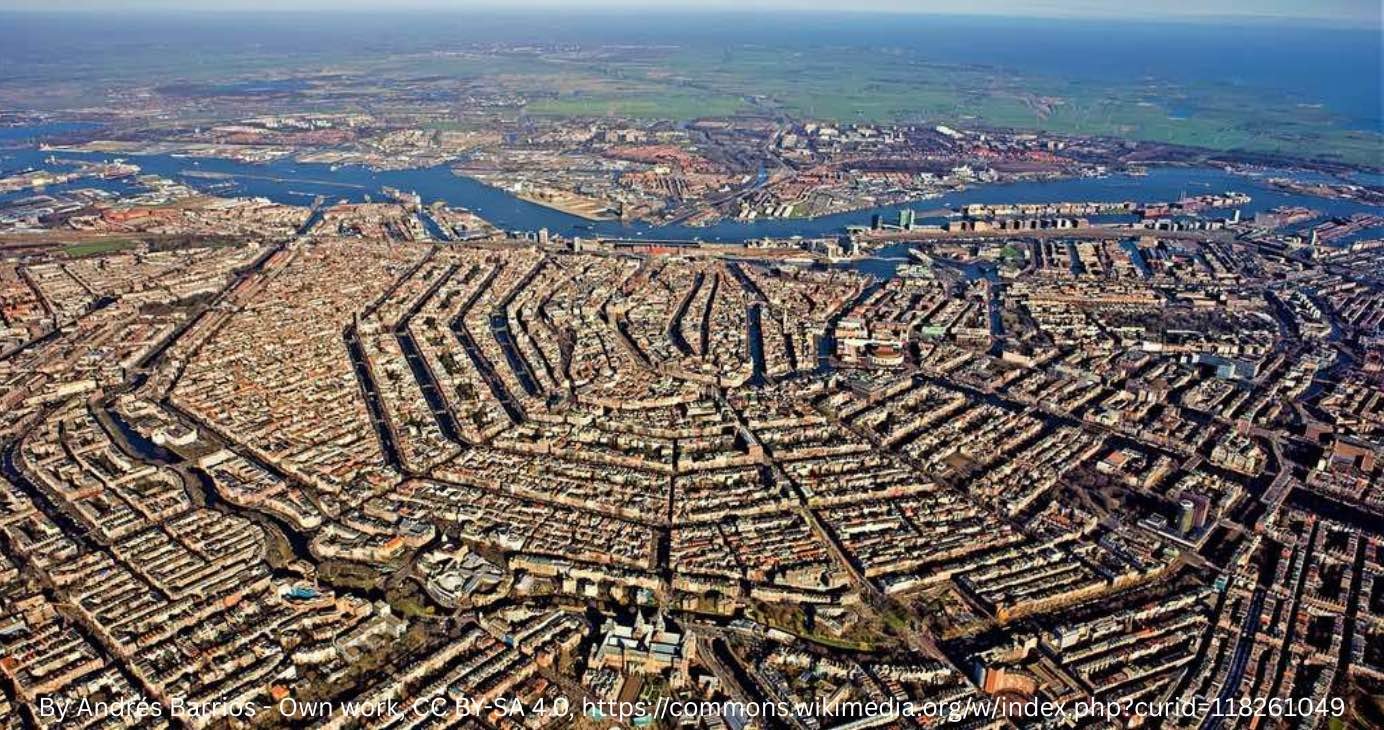
An aerial view of Amsterdam, showing the concentric ring of canals.
Amsterdam
With a population of close to one million, Amsterdam is the largest city in the Netherlands. Despite the fact that the parliament, the seat of the monarch and most foreign embassies are all located in The Hague, the Dutch constitution stipulates that Amsterdam is the capital city.
And it’s a very multicultural city, with around 180 nationalities represented. In large part this is due to the influx of people from different cultures after the Second World War. To fulfil the burgeoning demand for accommodation, new neighbourhoods were built in the western, northern and south-eastern parts of the city. Typically consisting of large, and sometimes ugly housing blocks surrounded by green spaces, these neighbourhoods represent a striking contrast to the typical Dutch Renaissance style of the old city centre.
The Bijlmer is one such area, the apartment buildings accompanied by a sprawling commercial zone. The district is served by a modern transport hub, the Bijlmer ArenA Station. Close by is the Johan Cruyff Arena, the home of AFC Ajax.
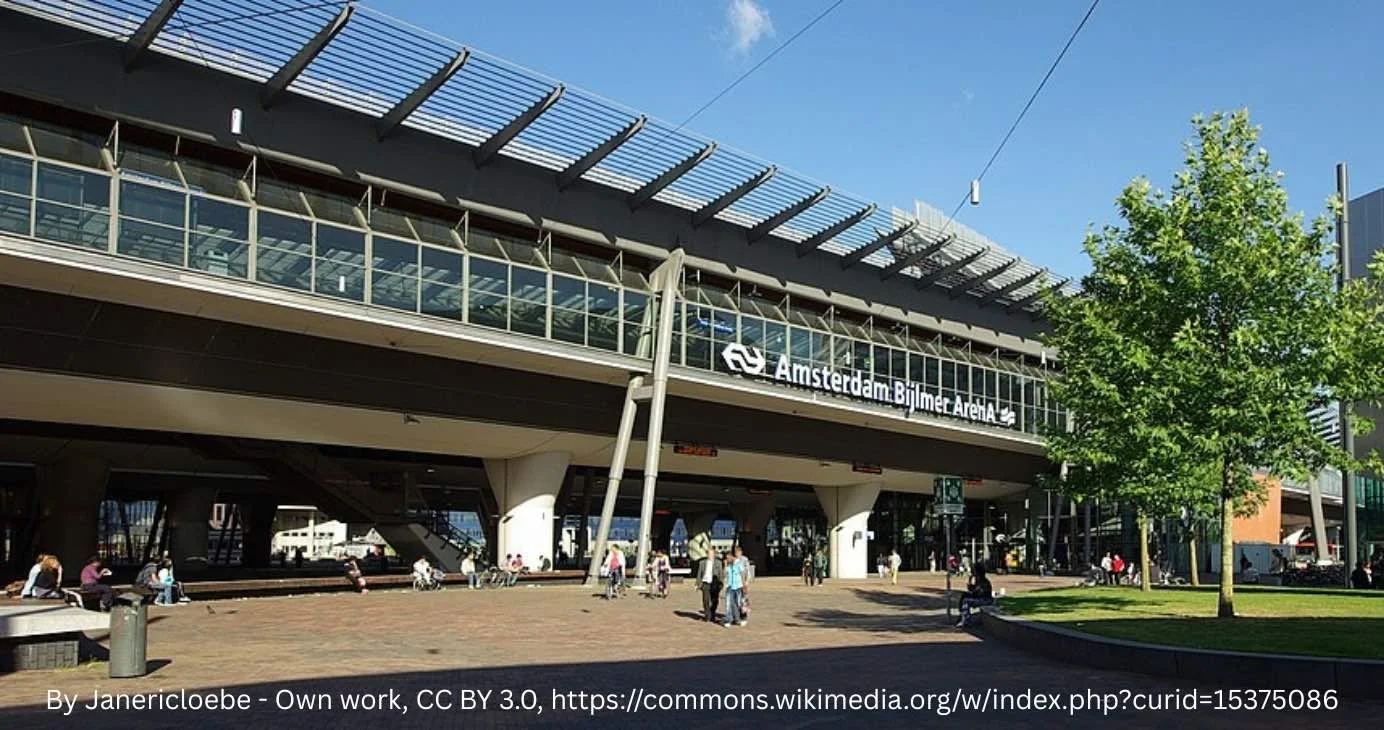
Bijlmer ArenA Station. This is the station that serves Peter Hedley’s office, to the south-east of the city. He regularly picks up a copy of a free Dutch newspaper to read on the metro, as he catches his train.
Originally a small fishing village, Amsterdam became a major port in the 17th century. This period was known as the Dutch Golden Age. At this time, the Netherlands became the wealthiest city in Europe and the leading centre for trade and finance. It also saw the adoption of a baroque style of architecture, with many of Amsterdam’s finest public buildings built in this style. The Royal Palace on Dam Square is a perfect example. The inner city’s canal system that we recognise today also evolved at that time, Amsterdam now boasting more than 100 kilometres, or 60 miles of canals. Most of these are navigable by boat. Bicycles too, are everywhere, with Amsterdam recognised as one of the most cycle-friendly cities in the world. Motorists beware!
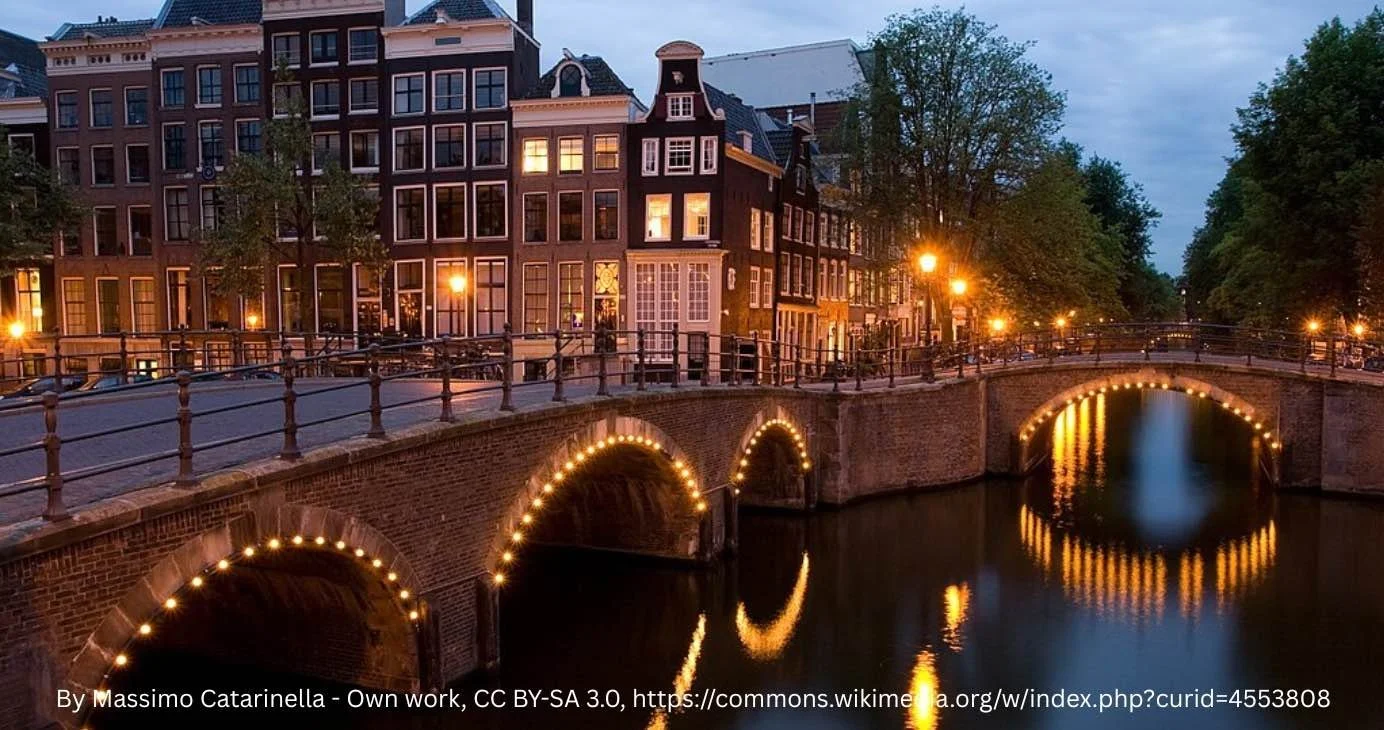
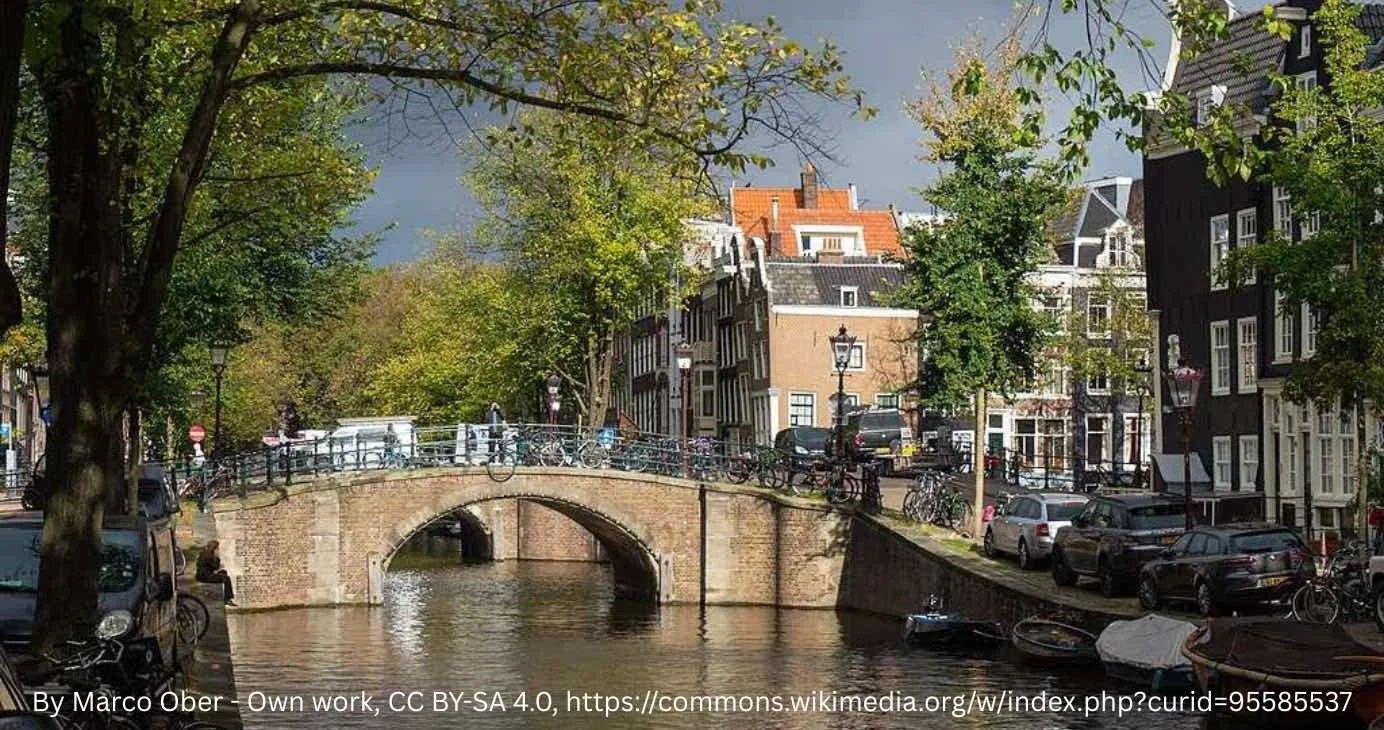
Spiegelgracht (above) and Reguliersgracht (below). Both pictures were taken at a quiet moment. The enchanting Dutch gabled architecture is clearly evident.
The area to the south of the city now serves as a major centre for large corporations and banks. Tower blocks increasingly define the expanding business district, which many believe has been influenced by Canary Wharf in London and La Défense in Paris. Louisa Hedley has had reason to visit the area twice.
Despite its importance as a commerce hub, Amsterdam has a proud cultural heritage. Museumplein plays host to the most important museums. Chief amongst these is the Rijksmuseum, housing nearly one million pieces. Perhaps the most famous artist associated with it is Rembrandt. His masterpiece, The Night Watch is displayed here.
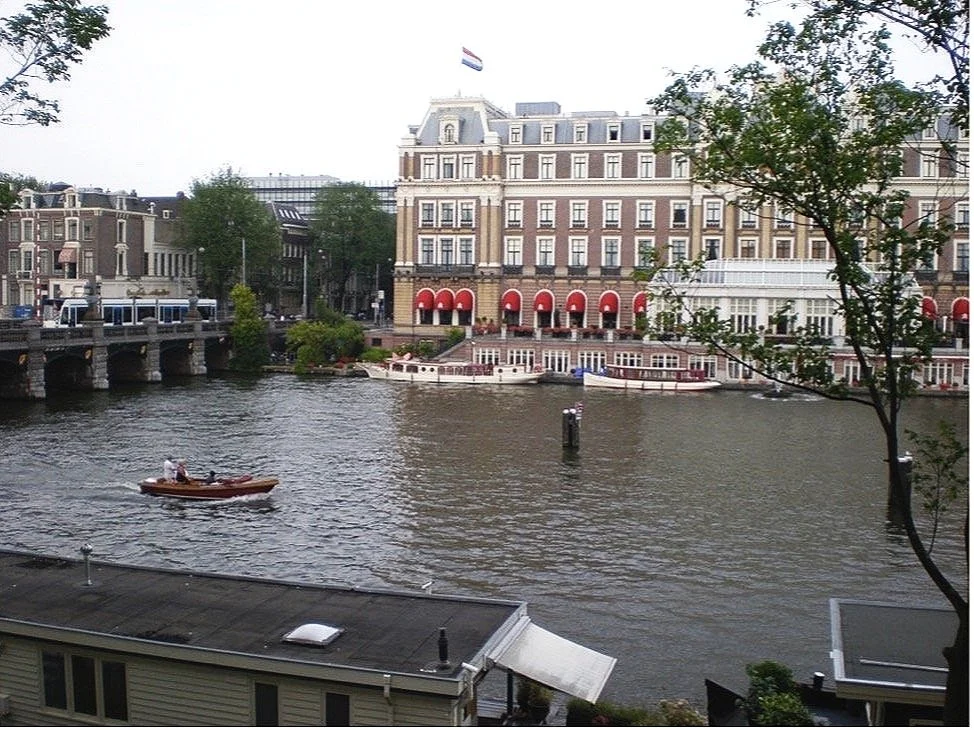
The prestigious Amstel Hotel.
Taken by Louisa Hedley from the window of the Sarphatikade apartment when she was escorted around six in one day. She was thrilled by the view of the busy river and knew that this was ‘the one’.
Amsterdam is one of the most popular tourist destinations in Europe, with around ten million visitors annually.
One controversial aspect of this tourism concerns the principal red-light district, known as De Wallen. The visitors there range from curious but polite onlookers, to groups of partying men daring each other to take advantage of the temptations on offer. An example of the former is Louisa Hedley, who, on a visit to Amsterdam, persuaded Peter, her husband to take her there.
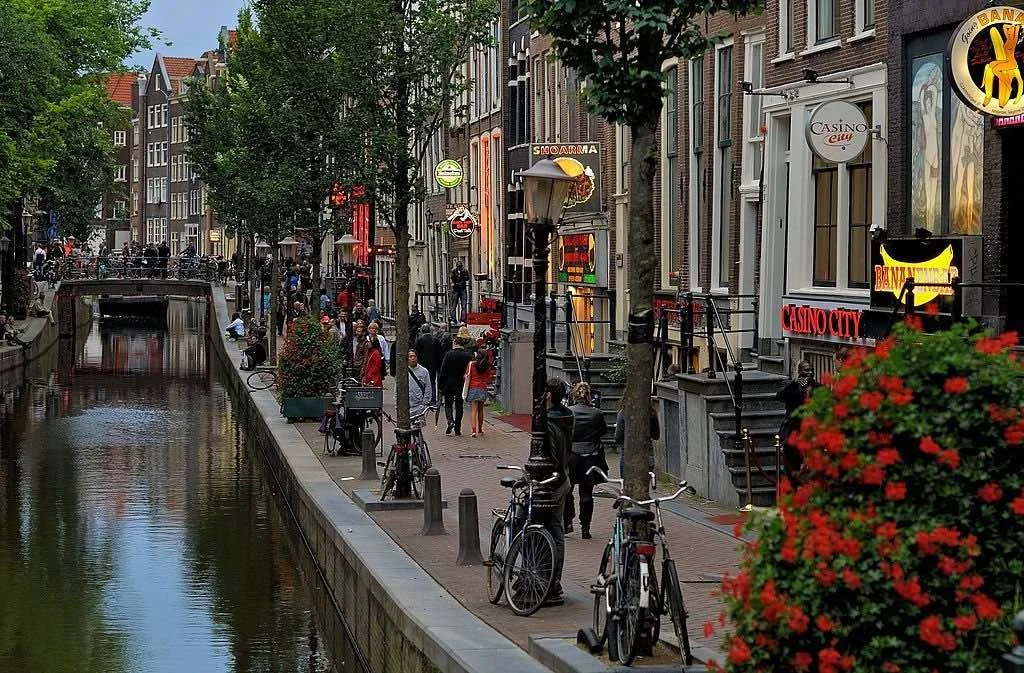
The De Wallen red-light district by day.
De Wallen is the controversial subject of a future piece of bonus content that will appear in the VIP area on this site.