A fresh start at The Café Toucan
We meet the woman behind Bournemouth’s new opening
Megan’s World — Interview
DORSET COAST · Lifestyle & Culture · Winter Edition
Interview by Sophie Alderton
The Café Toucan sits on Overland Road in the Bournemouth dormitory of Sandford, and commands a generous view down the hill and toward the promenade. Its double-fronted façade is distinctive – a pair of imposing brass-handled doors flanked by arched windows, above which sit stained-glass panels alive with tropical vegetation and the unmistakeable orange beaks of toucans in full plumage. On a grey November morning, with the glass lit from within, it stops you in your tracks.
Inside, the café-bar-restaurant hums with the quiet confidence of a well-run operation. An imposing bar runs the length of one wall. The dining tables are simply laid, the lighting warm but not cloying. Upstairs, there are rooms – the kind of thoughtfully furnished overnight accommodation that makes you wish you’d booked one. The terrace furniture is stored away for winter, but through the glazed doors you can see how good it must be on a summer evening, with the town falling away below and the sea glinting in the distance.
At a corner table, away from the lunchtime bustle, Megan Hughes is waiting for me with two coffees already ordered. She is thirty-eight, composed, and – when she smiles, which is often – unexpectedly warm for someone who has clearly had a very difficult year. In the months since her husband’s death, she has done something that most people in her situation would find unimaginable. She has opened a business. And from the look of it, quite a good one.
Let’s start at the beginning. You’re not originally from Bournemouth, are you?
No, I grew up in Bristol. I moved here for university – I studied marketing at Bournemouth, and I suppose I just never left. Which sounds rather passive, but it wasn’t really. I fell in love with the place. The sea, the light, the sense that it’s a town that takes itself just seriously enough without being pompous about it. I felt at home here in a way I hadn’t quite felt anywhere before. And then I met Adam, and that settled it.
Tell me about Adam. If it’s not too painful, of course.
She wraps both hands around her coffee cup.
He was a property consultant and developer. Ambitious, energetic – one of those people who is always slightly ahead of you in a conversation, already thinking about the next thing. He had tremendous drive. We were very young when we got together, and I think we grew up alongside each other in a lot of ways. He was good with the children. He worked hard to give us a comfortable life. I was very proud of what he built.
She pauses for a moment, and something shifts very slightly in her expression – though it passes quickly enough that you might not notice it.
He put an enormous amount of thought into this building. Into what it could be. I think about that a lot.
You opened the Café Toucan just a few months after losing him. That takes some courage.
I’m not sure courage is the right word. It was more that I didn’t have a great deal of choice. The building had been Adam’s project – his only development underway at the time of his death. When he died it became mine, along with all the financial obligations that came with it. I suppose I could have sold it. I thought very seriously about that. But the more time I spent here, the more I felt that it deserved to be brought to life rather than handed on. And if I’m honest, I needed something to get up for in the morning. Something that was mine. I don’t think that’s unusual for someone in my situation. Busyness is a kind of medicine.
Had you run a business before?
I worked in marketing in the hospitality industry before my children were born, so I understood the sector and I understood what makes a customer experience work. But running your own business is entirely different to working for someone else – the responsibility sits with you in a way that it simply doesn’t when you’re employed. Every decision, every problem, every cost overrun – it all comes back to you. I won’t pretend the first few months haven’t been a steep learning curve. Steep is probably an understatement. There have been some very long evenings with a calculator and a large glass of wine.
She laughs – a genuinely unguarded laugh that makes the people at nearby tables look up and smile.
The building has quite a history. It was Annie’s tearoom for years.
It was, and it was something of an institution. I actually came here as a student and have very fond memories of it. Tiered cake stands, waitresses in frilly aprons, that particular smell of baking that hit you as soon as you opened the door. It had a wonderful, slightly faded grandeur about it. The sort of place that made you feel that time had slowed down slightly. I think about that sometimes when I’m standing behind the bar – there’s a continuity to what we’re doing here that I find rather moving. Different people, different era, but the same building welcoming people in from the cold. That feels like something worth being part of.
Where did the name come from?
I was standing on the pavement outside one afternoon, looking up at the stained-glass panels above the doors. The toucans – those extraordinary beaks, the colours, the slightly absurd magnificence of them – and I suddenly thought, well, there it is. It named itself. I rather liked the idea of something a little unexpected, a little exotic, tucked into a Bournemouth street. And the toucan has a quality I find appealing. It’s distinctive, it’s slightly comical, but it’s also – I don’t know – quietly dignified. I like to think that describes the place as well.
She glances up at the panels, lit amber and green by the morning light outside.
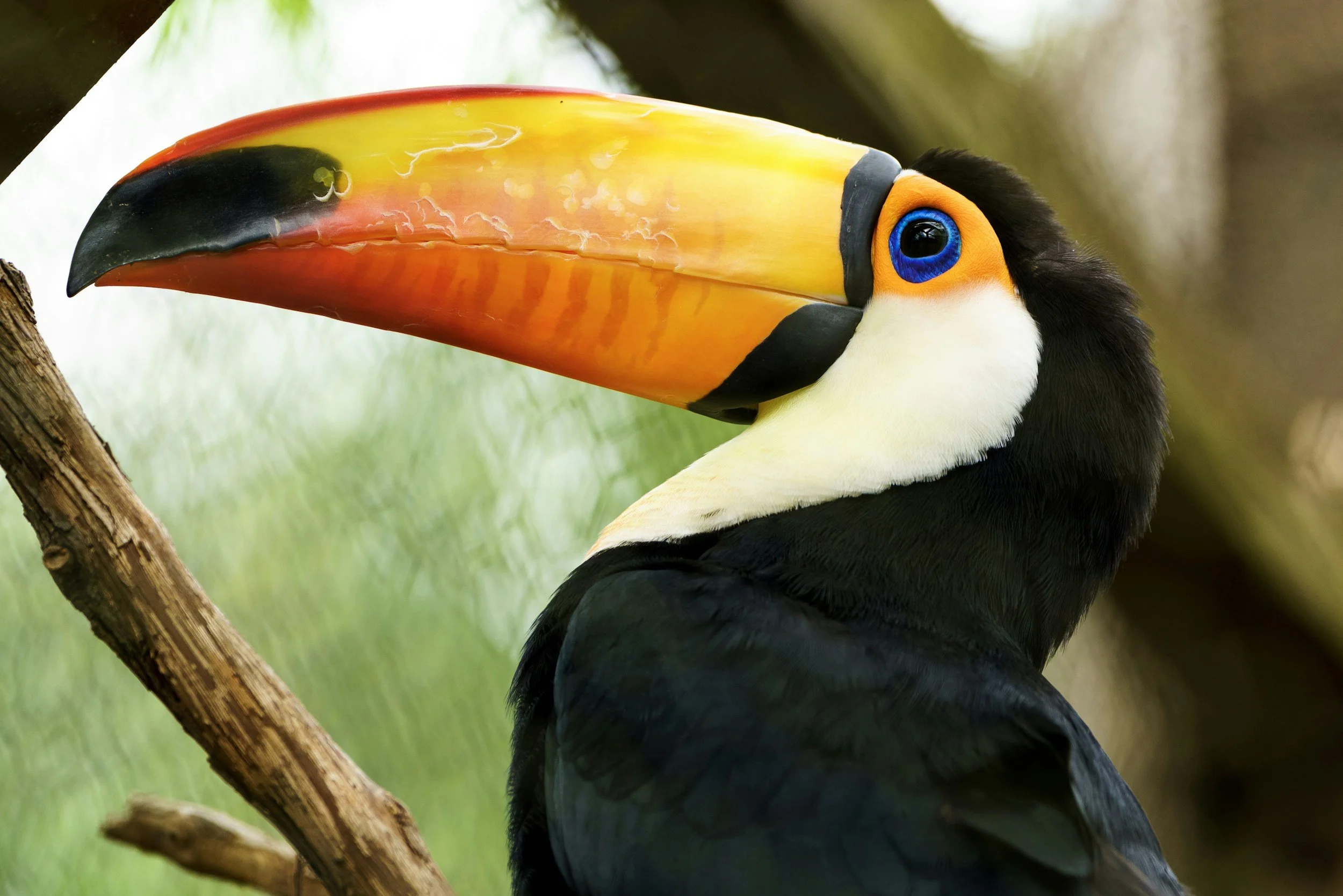
The characterful Toucan
What have you tried to bring to it that’s new?
I wanted it to feel like somewhere you’d want to come at any time of day. Morning coffee with a newspaper, a proper working lunch, dinner with people you like, a nightcap at the bar. And the rooms give it a completely different dimension – people staying over, having breakfast downstairs the next morning, feeling like they’re in someone’s home rather than a hotel. That intimacy was very much part of Adam’s original vision, and I’ve tried to hold onto it. I also wanted to keep what the building already had. There’s something about the proportions, the light, the way the space breathes, that has a particular quality. I didn’t want to design that out. I wanted to design around it.
Tell me about the people who work here.
They’re everything. I mean that quite seriously. Anna, who manages the day-to-day running of the floor, is exceptional. She’s organised, calm, and instinctively good with customers. Without her I would be considerably more grey-haired than I already am. And in the kitchen – well. Scott, our head chef is an interesting character. Perhaps like all good chefs, he has his own strong opinions, but the food is genuinely good, and our customers notice. You can’t argue with results, even when the journey is occasionally – interesting.
She raises her eyebrows in a way that suggests she is choosing her words with considerable care.
How has it been, managing all of this while also being a single parent?
My children are my absolute priority. Everything I do, I do for them. Molly is fifteen – she’s artistic, self-contained, much more perceptive than she lets on. Ben has just started secondary school, which has been its own adventure. They both need me, and I am very conscious of that. I’m fortunate to have good people here who mean I can leave when I need to and trust that things are in safe hands. And my mother comes to stay…
She smiles and does not finish the sentence.
But she’s there. And that matters more than I can say.
What do you do when you’re not here?
A brief pause. Almost imperceptible.
I’m almost always here. Or at home with the children. I walk quite a lot – along the prom, mostly. I find the sea helpful. There’s something about its complete indifference to whatever you’re carrying that I find oddly comforting. And I read, when I have the energy for it. Although I confess that recently I have fallen asleep over rather more books than I have actually finished.
She says it lightly, with the practised ease of someone who is very good at answering questions without quite answering them.
How are you, really?
She considers this for a moment longer than the other questions. She raises a hand in acknowledgement of a couple who have just entered, and mouths a greeting at the woman.
Sorry, that’s Rachel. A regular. Anyway… I’m all right. I have my children, I have good friends, I have this place. Grief is – it doesn’t leave, but you learn to carry it differently as time goes on. It’s less like a weight and more like a weather system. Some days it closes in and some days you can see clearly for miles. And I have found, perhaps unexpectedly, that having something to build has been the best possible thing for me. When you’re focused on something outside yourself, the other things become a little more manageable. Not always. But most days.
And what’s next for the Café Toucan?
To make it work. To fill these tables, to fill those rooms upstairs. To make it somewhere that people feel is genuinely theirs as much as mine – more so, even. It’s a beautiful place, and in no small part that’s down to my friend and rock – Kas Everson. She has done so much work on the design, I can’t thank her enough. I would love for the Toucan to become one of those places that people feel fond of in the way they felt about Annie’s. That sort of quiet, loyal affection that a place earns over time. That’s the ambition. It isn’t a modest one, I know. But I have learned recently that modest ambitions don’t get you very far.
She looks across the restaurant – at the bar, the tables, the winter light coming through the stained glass – and for just a moment the composure drops, and you see something else. Not sadness, exactly. Something more complicated than that. Then she looks back.
I think we’ll get there.
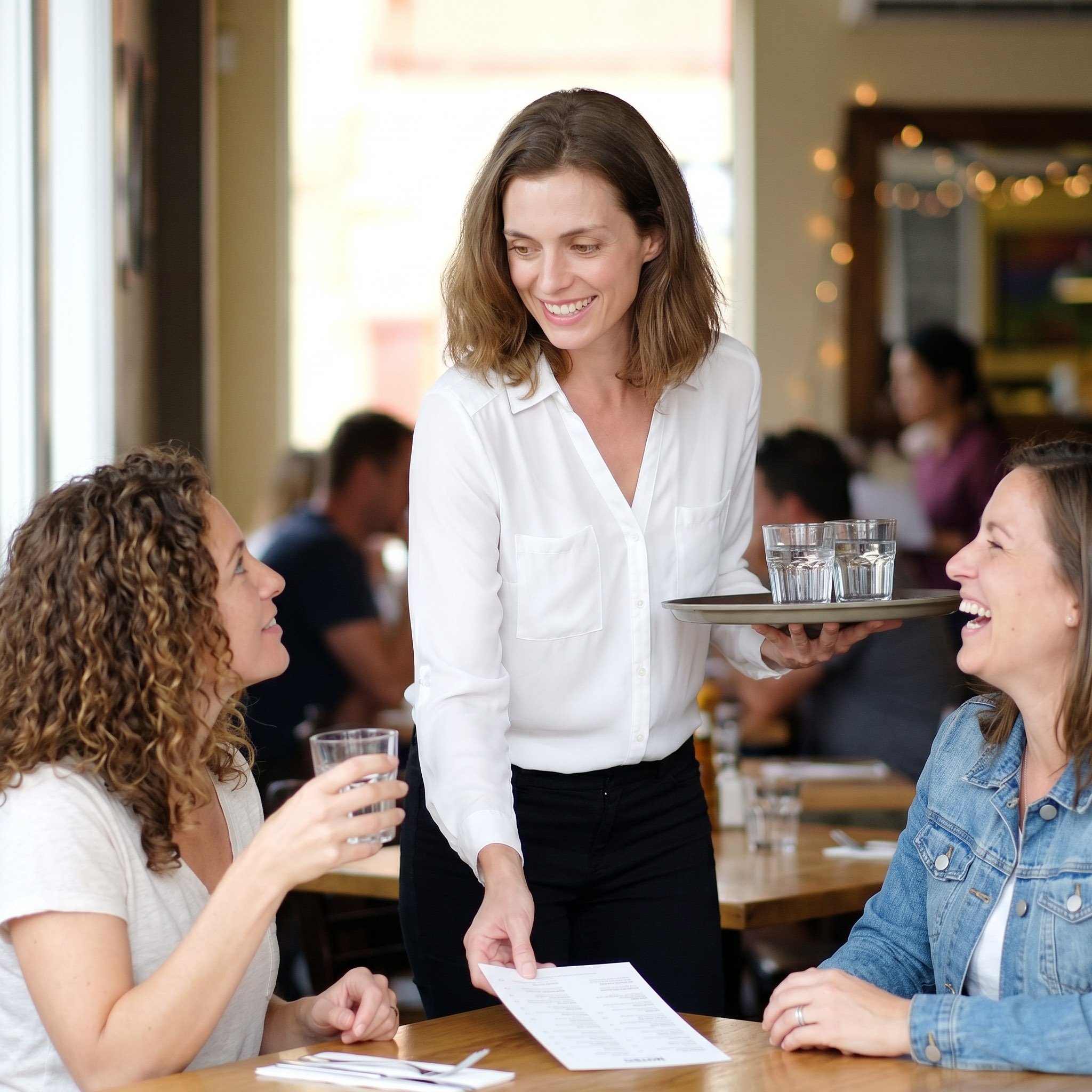
Megan Hughes in The Café Toucan